
The question of whether raw food is good for dogs is one of the most debated topics in canine nutrition. The answer is nuanced: a raw diet can offer significant benefits for a dog's coat, digestion, and energy levels, but only when it is complete, balanced, and prepared safely. Because of the potential risks and the wide range of nutritional opinions, it is hard for dog owners to know where to start. This comprehensive guide breaks down the pros and cons, so you can make an informed decision about whether a raw food diet for dogs is the right choice for you and your pet.
What Are the Benefits of Raw Food for Dogs?
A raw food diet for dogs is seen by many as a more natural way to feed as it usually means your dog’s food is less processed than traditional commercial pet foods. Owners who switch to raw feeding report seeing a whole range of health benefits for their dogs:
- Leaner build, better condition
- More energy
- Fresher breath and cleaner teeth
- Healthier ears and eyes
- Glossy coat
- Healthier bowels and stools
- A reduction in allergy symptoms
- Heart health is also said to be improved.
However, there have been no official studies carried out as yet comparing the benefits of raw food for dogs with traditional commercial dog food.
What Are the Problems with Raw Food for Dogs?
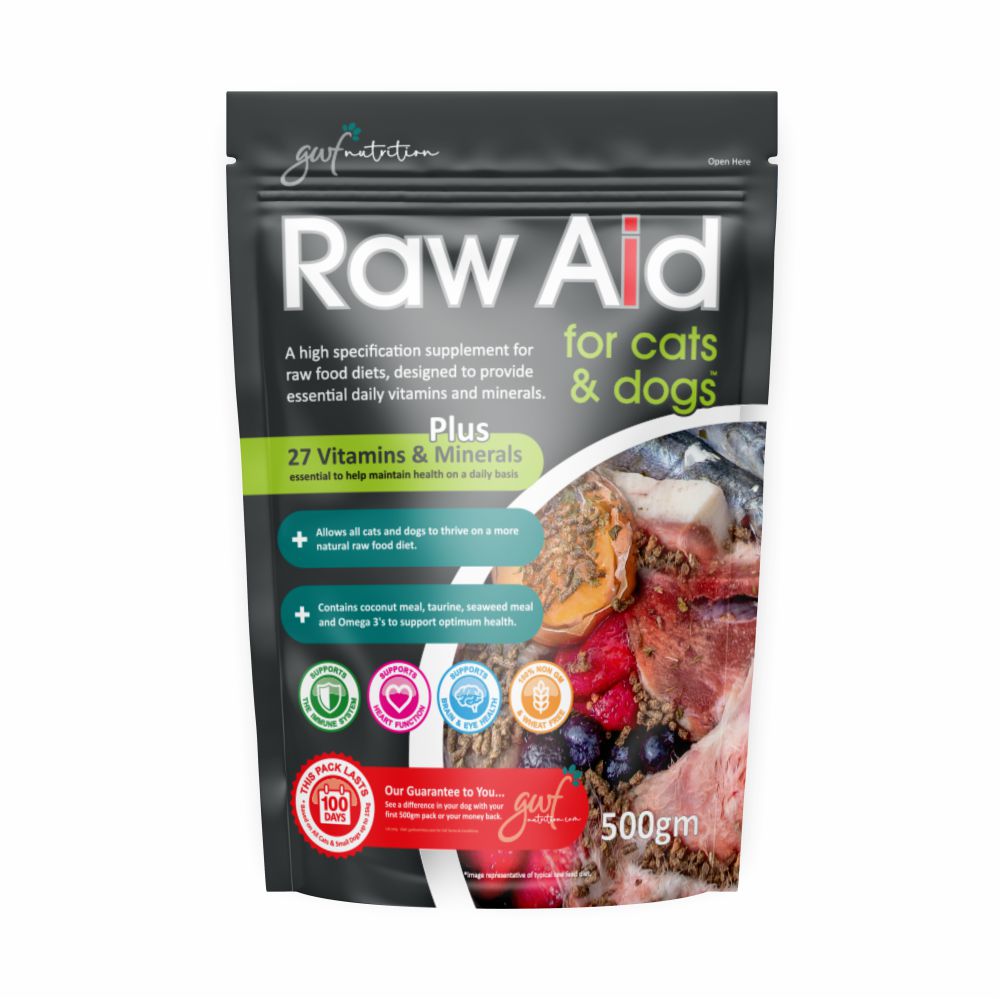
When feeding your dog a homemade raw diet it is important to make sure you are using a variety of ingredients so you don’t miss out vital nutrients from the diet. Follow raw recipes that are properly prepared for dogs if you can to make sure they aren’t missing vitamins and minerals. A multivitamin and mineral supplement like Raw Aid for Cats & Dogs can also help to give you peace of mind when it comes to giving your dog what they need.
There are also potential risks surrounding food hygiene when it comes to raw feeding your pets. Raw food can carry the risk of disease from bacteria and pathogens just like when you are preparing food for yourself. Raw meat should be handled and stored with care to prevent food poisoning for you and your dog.
And of course preparing meals for your dog from home is going to be more time-consuming than offering a commercially prepared food.
Do Vets Recommend a Raw Food Diet for Dogs?
Because of the risks associated with preparing your dog’s raw food from scratch, a lot of vets advise owners to stick to commercial dog foods, raw or otherwise. On the whole these will have been designed with your dog’s needs in mind, be nutritionally balanced and prepared to strict hygiene standards.
However, there are also many vets who advise that done correctly raw feeding can be a healthy lifestyle change for your dog, whether you choose a commercial raw dog food supplier offering complete meals or you do it yourself at home.
What are the Different Raw Food Diets for Dogs?
There are several different ways of feeding your dog or cat a raw food diet and at first glance it can be confusing to decide what's the best way to approach switching your dog to raw.
-
Complete Raw Food for Dogs
These should be complete meals that don't require extra ingredients to meet your dog's nutritional needs. They are often frozen and are easy to portion out and defrost - perfect for a busy lifestyle. There are plenty of complete options on the market and it's worth taking time to compare a few if you decide to go down this route to make sure you are giving your dog a good quality product.
-
80-10-10 Raw Dog Food
This is an alternative to complete raw food and gives you the main components - meat, bonemeal and organ meat. This means your dog will be getting most of what he needs but may need some fruit and vegetables or a raw supplement like Raw Aid for Cats & Dogs to make sure all the vitamins and minerals are balanced from day to day.