6 Key Indicators Your Dog Needs Mobility Support
If you are concerned that your dog may be suffering from muscle loss, here are some common symptoms to look out for:
-
Have Your Dog’s Muscles Got Thinner?
If your dog is suffering from muscle atrophy, one of the first things you may notice are the muscles looking thinner - for example your hand might reach all the way round your dog’s leg when it didn’t before.
-
Has Your Dog Lost Weight?
If you have a dog that is losing weight and muscle mass you may notice that they feel lighter when you pick them up. Try weighing your dog to see if it has lost any weight. Regular weigh-ins can be a good idea if you are concerned about weight loss.
-
Have You Noticed Any Muscle Weakness, particularly in the back legs?
For example if your dog is losing muscle mass in the hind legs he may be unable to support his weight and you may notice that he is favouring the front legs.
-
Is Your Dog Getting Flabby or Feel Less Firm?
Flabby muscles on your dog may indicate muscle loss. Strong muscles feel firmer, so if your dog feels softer it may be because of muscle loss.
-
Is Your Dog Lethargic?
Muscle loss makes it more difficult to move about and a dog with muscle atrophy may also be suffering with painful joints, a lack of energy or an underlying condition that needs to be addressed.
-
Are There Any Changes in Your Dog's Posture?
Is your dog dragging its paws or crossing the legs? Or have you noticed a sagging back? The muscles work with the bones to help the body stay upright and a loss in muscle mass makes it more difficult to support the body. Therefore if you notice a change in posture it could be down to muscle loss.
How to Support Muscle Recovery & Strength
There are a number of measures you can take to support your dog with muscle atrophy, including lifestyle changes and diet.
Speak to Your Vet
This is vital first and foremost, so that the problem can be properly diagnosed and treated. Muscle atrophy can be symptomatic of a number of underlying conditions and if you do notice any of these symptoms the first step is to see your vet.
Exercise Your Dog Regularly
If your dog is suffering from muscle atrophy due to ageing or from disuse you can help them by maintaining a healthy exercise program. Even older dogs can still benefit from a daily walk as long as you pay attention to your dog’s signals and don’t overdo it. Again, talk to your vet before embarking on a new exercise regime for your senior or recovering dog.
Support Through Nutrition
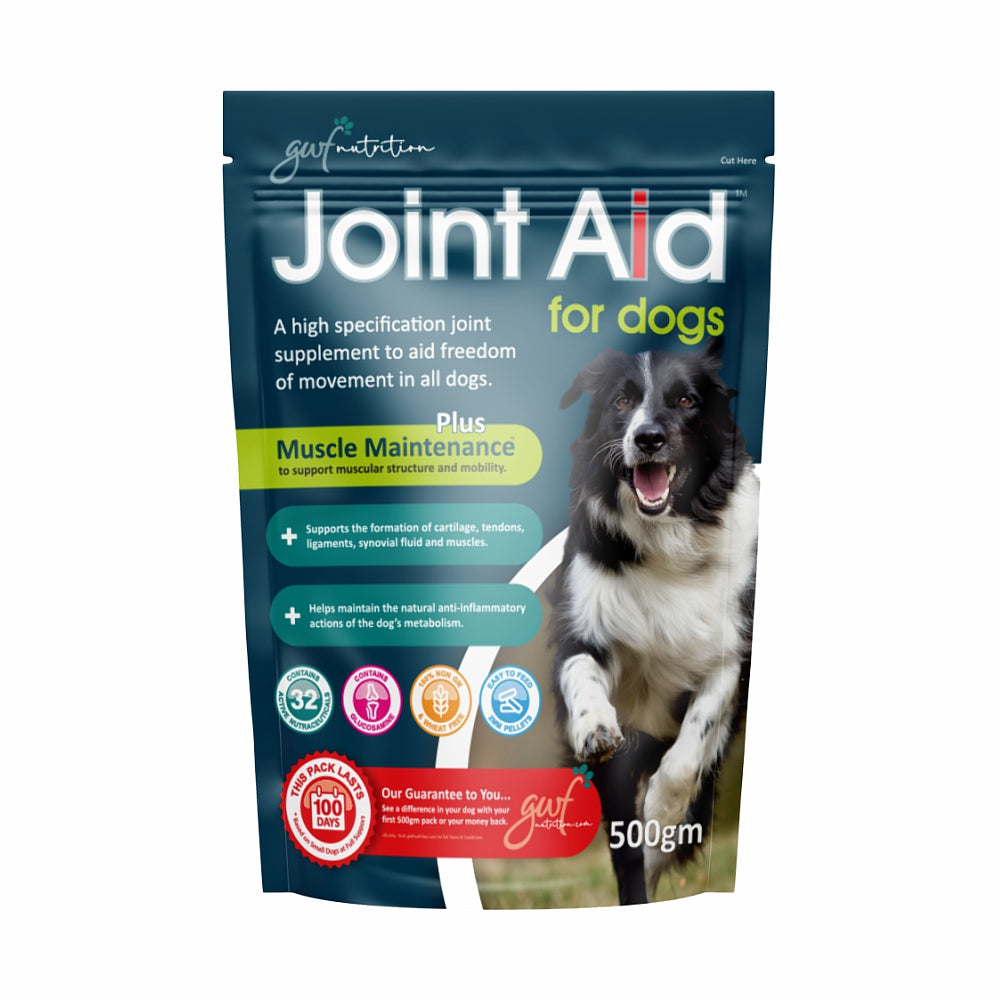
Exercise is important but the body cannot maintain muscle mass without the correct building blocks. This is why providing the right nutrients is vital for maintaining healthy muscles for your dog. Good quality protein is important for providing the right combination of amino acids - key for supporting good muscle structure and replenishment. A multi-action joint & muscle supplement can help to provide essential amino acids and other nutrients to support healthy muscle tissue and the entire muscloskeletal frame whilst helping to support and lubricate the joints.
Consider Alternative Therapies
Therapies like hydrotherapy or acupuncture can be a good way of helping the muscles without putting pressure on the joints.
This article is not intended to provide medical advice and any concerns about the wellbeing of your dog should always be discussed with your vet straightaway.