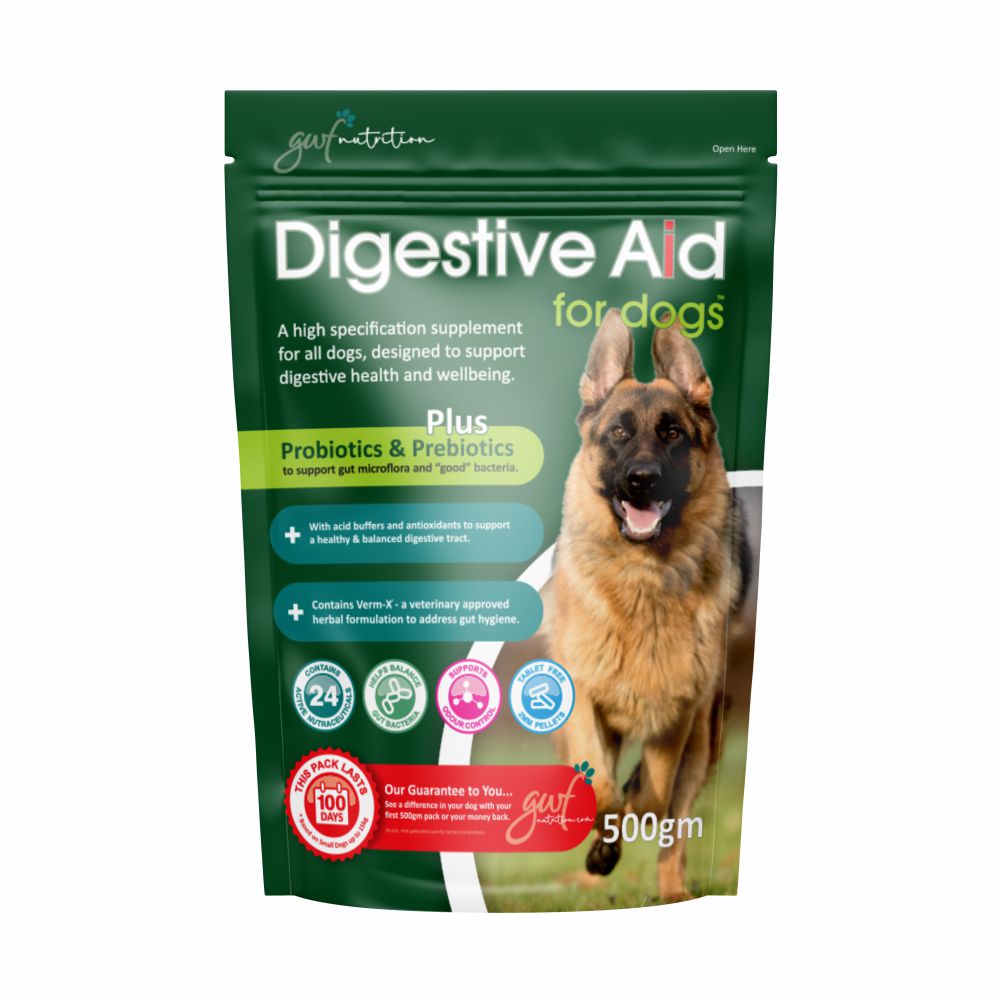

In the journey to support a dog's health, few topics are as crucial as gut health. But are probiotics for dogs effective? Yes, absolutely, but only when you choose a product containing the right strains and feeding amounts and complementary ingredients.
A multi-action approach to dog gut health combines probiotics (beneficial live bacteria) with prebiotics (the fuel that feeds them) to support the gut microbiome, which houses up to 70% of your dog's immune system.
This guide breaks down the science behind canine digestion and explains what to look for when choosing a digestive supplement to ensure you are providing high specification support for your dog.
Should I Give My Dog Probiotics or Prebiotics?
For optimal digestive function, you should give both. Using both together is known as a synbiotic approach.
Prebiotics act as the specific fuel source that allows beneficial probiotics to survive, colonise and thrive within the gastrointestinal tract. Together, these components help regulate the natural microorganisms in your dog's gut to support stool consistency, nutrient absorption and overall immune response.
Fundamentally, they play a big role in keeping your pup and their tummy happy and healthy.
What is the Difference Between Probiotics and Prebiotics for Dogs?
While they sound similar, they perform entirely different roles within the digestive system.
What are Probiotics for Dogs?
Probiotics are live, beneficial bacteria that help maintain a balanced gut microbiome. While a dog's digestive system naturally hosts millions of micro-organisms, this delicate baseline can easily be disrupted.
Probiotics work by boosting the populations of beneficial bacteria. This active microflora aids daily digestion, helps crowd out "bad" bacteria, and supports natural immune functions.
While everyday items like plain live yogurt contain some natural bacteria, standard human formats often cannot survive the highly acidic environment of a dog's stomach. High-specification supplements provide targeted, resilient strains designed to reach the intestines alive.
What are Prebiotics for Dogs?
Prebiotics are non-digestible dietary fibres that act exclusively as a food source for the beneficial bacteria already living in your dog’s stomach and intestines.
Unlike probiotics, prebiotics are not live organisms. They pass through the upper digestive tract intact until they reach the colon. Once there, friendly bacteria ferment them into short-chain fatty acids (SCFAs). These fatty acids provide vital energy to the gut lining, keeping the intestinal wall strong and allowing good bacteria to multiply.
Prebiotics can be found in premium dog foods or via specialised botanical ingredients like cinnamon, raw garlic, and nettle. In high-quality supplements, they are typically included as structured compound fibers called oligosaccharides, like those found in Digestive Aid for Dogs.
Signs Your Dog May Need Digestive Support
Dogs can't tell us when their stomach feels off, but a disrupted gut microbiome shows up in very specific physical signs. Look out for these common indicators that your dog needs targeted support:
Loose or Variable Stools: Intermittent diarrhoea, soft "pudding-like" stools, or stools that start firm but become loose during a walk are classic signs of a bacterial imbalance in the large intestine.
Excessive Flatulence (Wind): While occasional gas is normal, frequent, foul-smelling wind is a clear byproduct of improper food fermentation in the gut.
Gurgling Stomach (Borborygmi): Loud, audible rumbling or gurgling sounds coming from your dog's abdomen often indicate excess gas production and digestive distress.
Eating Grass or Lethargy: Dogs frequently eat grass to soothe an unsettled stomach or induce vomiting when experiencing acid buildup or nausea.
"Scooting" or Anal Gland Issues: Soft stools fail to naturally empty a dog's anal glands when they pass motion. If your dog is dragging their bottom across the floor, poor digestion is often the root cause.
Support From Probiotics vs. Prebiotics
Support the gut's "good" bacteria: during and after antibiotic courses, periods of acute stress (travel, fireworks), or an unsettled digestion.
Support the environment: regular prebiotics help to maintain a stable environment and support the natural defences, particularly important if you are introducing new ingredients into your dog's diet.
Why Choose a Multi-Action Digestive Supplement?
Many standard high street supplements online provide standalone bacteria strains, which can struggle to colonise the gut effectively on their own. Formulated at our mill in Wiltshire, Digestive Aid for Dogs uses a comprehensive multi-action approach that supports both the bacteria population and the environment it needs.
It features four essential prebiotic fibres - galacto, fructo, mannan and xylo oligosaccharides - alongside 18 other active nutraceuticals.
To ensure your dog can use as much of these actives as possible, our formulation also includes our unique Oatinol Delivery System to maintain higher nutrient absorption, as well as Verm-X - a vet approved herbal blend designed to support natural intestinal hygiene.
Check With Your Vet
Note: This article is not designed to provide medical advice. If you have any concerns about your dog’s health or wellbeing, including digestive upsets, you should always consult your vet.