Hay or Haylage
This is essential during the winter months or where there is not enough access to pasture. When working out how much hay or haylage is required when there is little to no grazing, take the amount of forage being provided and take away the percentages above. For example, 1.22kg of hay minus 18% = 1kg of dry matter.
Basing the average adult liveweight at 70kg, with a 1.5% intake, this equates to 1.28kg of hay, or 2.63kg of haylage per day. The fibre intake is the vital part of their forage diet, so it is important to ensure enough forage is provided to ensure a healthy digestive system.
Toxic Plants
Look out for plants that are poisonous to alpacas, including rhododendron, laburnum and buttercups, and make sure they are removed from paddocks. Some poisonous plants may even become palatable once dead/dried. Make sure you look out for anything that’s likely to be toxic and pull or dig it out before undertaking paddock maintenance, such as topping, or cutting for hay.
Additional Fibre
Camelids like alpacas and llamas have evolved to condition well on fibre. A slow release, high energy source of soluble fibre will not only support your alpaca’s digestive health, but will also support the body conditioning. Our feed Fibregest is a perfect source of such soluble fibre and is the perfect complement to both Camelibra and Hembra & Cria.
Concentrated Alpaca Feeds
Although concentrated feeds should not form the major part of your alpaca’s diet, alpacas do have high mineral needs and so these additional feeds are important for ensuring your animals are getting the nutrients they need, particularly during the winter months and for pregnant and lactating hembra.
The levels of certain minerals can vary hugely in British pasture, including calcium, phosphorus, zinc, copper, magnesium, cobalt and selenium, which means your alpaca may not be getting the recommended levels. Having your pasture properly analysed will give you an idea of any deficiencies in the grazing, which can then be provided with a supplemental feed.
Because alpacas cannot tolerate high levels of concentrated feeds these are usually specialist products that contain higher than usual mineral levels (making them potentially toxic to other livestock). Unfortunately, most of the available feeds on the market today are simply standard livestock offers (such as goat mix, which is already toxic to sheep) or mixes formulated for other species and tweaked for camelids, and such require a high feeding rate. This is not ideal for the alpaca’s digestive system and overall health.
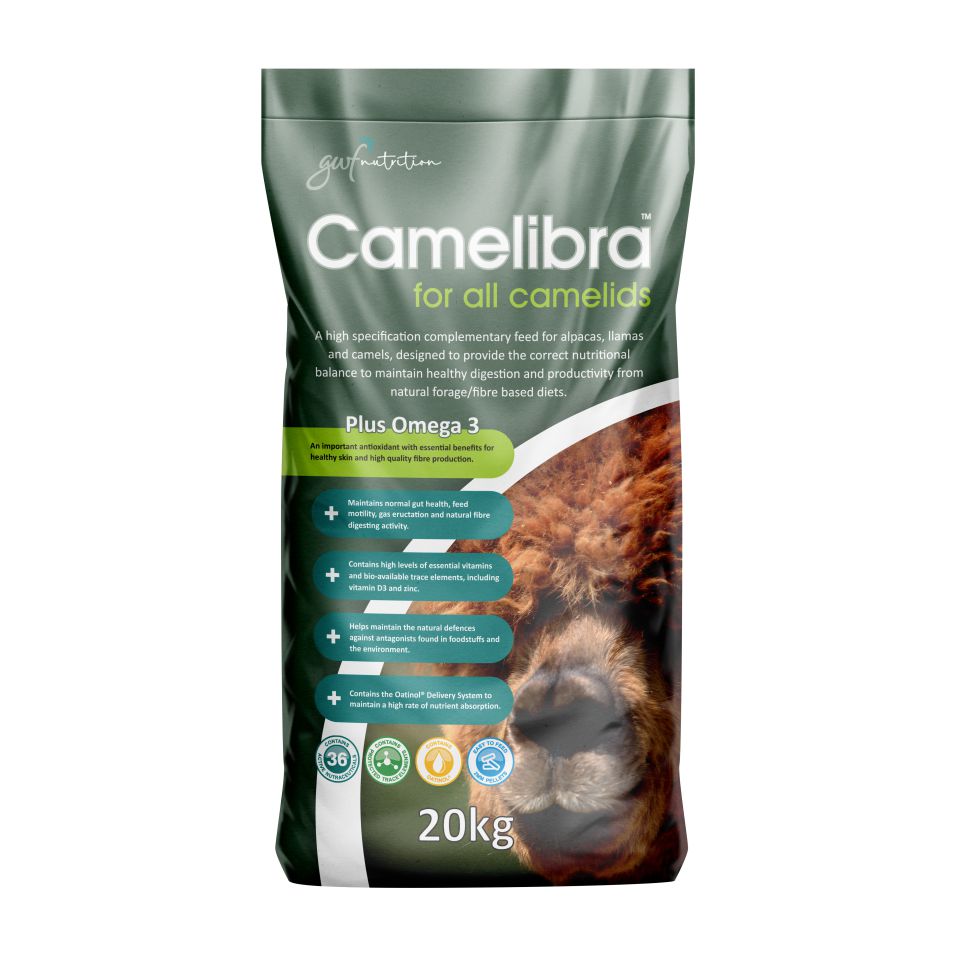
Camelibra has been specifically formulated from the ground up to provide a very concentrated feed to meet the unique nutritional requirements of alpacas and other camelids, without impacting on their forage intake. Unlike mixes and cubes, Camelibra only utilises around 5% of the daily intake, meaning up to 95% of their diet can be forage, which is better for your alpaca's digestive health. In situations where there is a known deficiency, a higher level of Camelibra can be fed to help provide the additional nutrients needed (1.25 – 1.5x the normal feeding rate). Alternatively, a target supplement like a drench or bucket lick can also help.
Our complementary feeds include:
- Camelibra
- Hembra & Cria
- Crialibra
Simplified Feeding Programme
Use our at-a-glance feeding guide to help you understand which products to feed depending on the age of your herd. For detailed feeding guidelines, see our full range of UK made alpaca feeds or refer to our product packaging.